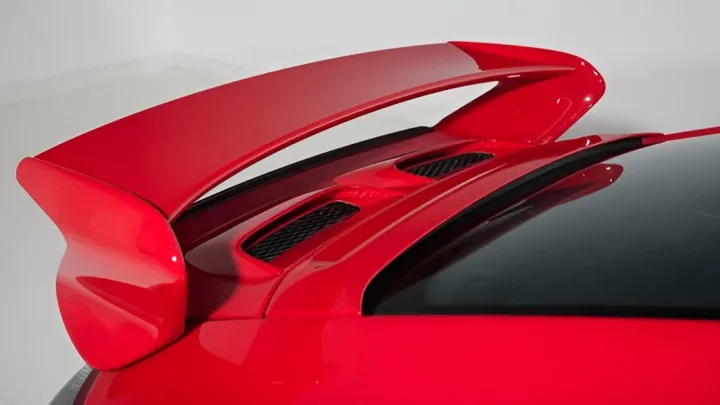
A rear spoiler is an aerodynamic add-on designed to manage airflow at the back of a car. Its main job is to reduce unwanted lift and turbulence that can make a vehicle feel lighter or less planted at higher speeds. Some spoilers also reduce drag in certain designs, while others increase drag in exchange for better stability.
What a Rear Spoiler Is (in plain English)
A rear spoiler is typically mounted on the trunk lid, hatch, or roof edge. The name “spoiler” is literal: it spoils airflow patterns that cause lift, extra turbulence, or an unstable low-pressure wake behind the car.
The Aerodynamics: What’s happening to the air?
When your car moves forward, air flows over the hood, roof, and down the rear section. The rear of the vehicle is where airflow often separates (breaks away), creating a turbulent wake behind the car. That wake can increase drag and reduce stability.
A spoiler changes what happens in that rear zone using two common effects:
1) It reduces rear lift (the #1 benefit)
Many cars naturally produce some lift at speed, especially toward the rear. A spoiler helps reduce that lift by changing the pressure distribution and airflow separation near the back end. Reduced lift can feel like improved straight-line stability and more confidence during lane changes or sweeping turns.
2) It can improve stability by shaping the wake
The air wake behind a vehicle is a big part of aerodynamic behavior. Some spoiler designs help control that wake, sometimes reducing turbulence and improving stability. On certain body shapes and small angles, drag can improve; on others, drag can worsen.
Spoiler vs Wing (Stop mixing these up)
This matters for both accuracy and buying decisions.
Rear Spoiler
-
Usually attached to the body (trunk/hatch/roof edge).
-
Works by disrupting airflow to reduce lift and turbulence.
-
Typically smaller and more “integrated.”
Rear Wing
-
Usually stands off the body so air can flow above and below it.
-
Functions like an inverted airfoil to generate downforce.
-
Often creates more drag, which is fine on track cars where grip matters most.
Buyer translation:
If you drive mostly city and normal highway speeds, a tasteful spoiler may be about stability and looks. If you track the car, a properly engineered wing is the tool.
Does a rear spoiler reduce drag or increase drag?
It depends. This is where internet arguments breed like rabbits.
-
Many spoiler setups increase drag because they add a barrier to airflow.
-
Some designs and angles can reduce drag by controlling separation and wake size, especially on certain rear shapes (like some hatchback/fastback conditions at small angles).
Safe conclusion:
A spoiler is best described as a tool for reducing lift and improving stability. Drag changes are design-dependent, and “one-size-fits-all” claims are usually wrong.
When does a spoiler actually help (real-world expectations)?
Aerodynamic forces grow quickly with speed. That’s why most people feel spoiler benefits more on highways than around town. Practical “noticeability” varies by:
-
vehicle body shape (sedan vs hatch vs fastback),
-
spoiler height/angle,
-
and whether it’s cosmetic or engineered.
Typical driver experience:
-
Low speed: mostly aesthetic (little measurable effect).
-
Highway speed and above: can improve stability and planted feel, especially in wind, lane changes, and long curves (depending on design).
Types of rear spoilers (and what they’re good for)
1) Lip spoiler (subtle trunk lip)
-
Common on sedans/coupes.
-
Often focused on reducing lift and cleaning up airflow.
2) Ducktail spoiler
-
A raised lip shape that can help manage separation on certain rear designs.
3) Roof spoiler (hatchbacks/SUVs)
-
Helps manage airflow off the roofline and rear wake.
4) Active spoiler (motorized, speed-based)
-
Changes position based on speed/mode, aiming for a balance between drag and stability.
Important note: Many “factory-style” spoilers are partly styling and may provide limited aerodynamic benefit.
Material choices (what matters for normal drivers)
-
ABS plastic: common, budget-friendly, good for daily use.
-
Fiberglass: customizable but can crack if poorly made.
-
Carbon fiber: strong and light, but you’re paying for performance + look.
For AdSense-friendly, practical content: emphasize durability, fitment, and safe installation more than “race gains.”
Installation and safety (keep it clean)
A spoiler only works properly if it’s secure and aligned. Poor installation can cause:
-
rattles,
-
paint damage,
-
water leaks (trunk/hatch),
-
or, worst case, detachment at speed.
If the spoiler includes a brake light or wiring, professional install is often safer.
Maintenance and care
-
Wash with mild soap, avoid abrasive pads.
-
Check mounting points occasionally.
-
If it’s carbon fiber, use finishes that protect UV and clear coat.
Legal and insurance considerations (USA)
Rules vary by state and by how extreme a modification is. Massive wings or sharp protrusions can create inspection or safety issues in some situations. Also, some insurers consider major mods as increased risk. For most mild spoilers, it’s usually fine, but it’s smart to disclose significant modifications.
Conclusion
A rear spoiler works by managing airflow at the rear, primarily to reduce lift and improve stability at speed. It’s not always a drag-reduction device, and it’s not the same thing as a wing. Choose spoilers for fitment, quality, and realistic expectations, and you’ll avoid the common mistakes that lead to wasted money and zero performance change.
Frequently Asked Questions (FAQ)
What does a rear spoiler do?
A rear spoiler manages airflow at the back of a vehicle to reduce rear lift and improve stability, especially at higher speeds. Drag effects depend on the spoiler design and angle.
How does a rear spoiler work?
It works by disrupting and redirecting airflow as it leaves the rear of the car, changing pressure and airflow separation to reduce lift and stabilize the vehicle.
Is a spoiler the same as a wing?
No. A spoiler mainly reduces lift by spoiling unwanted airflow, while a wing is an inverted airfoil designed to generate downforce, often with more drag.
Does a rear spoiler reduce drag or increase drag?
It can do either depending on design and angle. Many spoilers add drag, while some setups can reduce drag by improving airflow separation and wake behavior on certain vehicle shapes.
At what speed does a spoiler start to matter?
Effects are typically more noticeable at highway speeds and above, because aerodynamic forces increase rapidly as speed increases. The exact speed varies by car shape and spoiler design.
Do spoilers improve fuel economy?
Sometimes, but not reliably. If a spoiler reduces drag on a specific vehicle and setup, it may help efficiency. If it increases drag, it can reduce fuel economy.
Can an aftermarket spoiler make handling worse?
Yes. Poorly designed or incorrectly installed spoilers can increase drag, create instability, or add lift in some situations. Fitment and engineering matter more than appearance.
What’s the best spoiler type for daily driving?
A low-profile lip or factory-style spoiler is usually best for daily use because it’s less likely to add excessive drag and typically fits the vehicle properly.
Are cosmetic spoilers worth it?
They can be worth it for styling, but many cosmetic spoilers provide minimal aerodynamic benefit. If you want real performance improvements, choose an engineered design matched to your vehicle.
Do I need a professional to install a rear spoiler?
For drill-mounted spoilers or spoilers with wiring (like an integrated brake light), professional installation reduces the risk of leaks, paint damage, or unsafe mounting.
Disclosure
Some links may be affiliate links. That means we may earn a small commission at no extra cost to you.