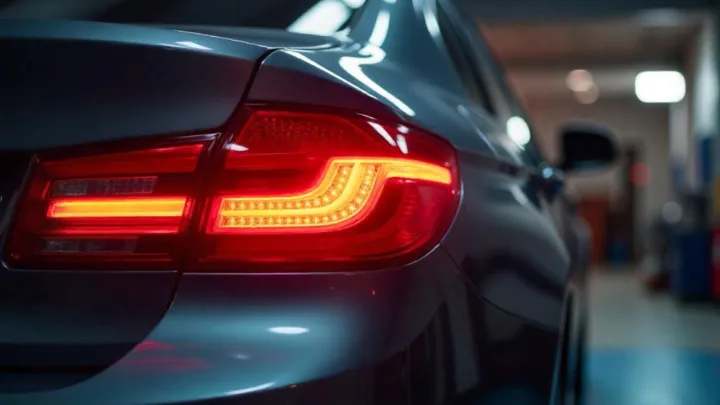
The center brake light (also called the third brake light or CHMSL: Center High Mount Stop Lamp) sits higher than your left/right brake lights so drivers behind you can see braking sooner. When it fails, visibility drops, reaction time shrinks, and you increase the chance of a rear-end collision.
The good news: most CHMSL issues are quick to diagnose and often DIY-fixable with basic tools. This guide covers the top 5 problems, plus a special LED module section (very common on newer vehicles), a troubleshooting table, and a simple step-by-step checklist.
Tools You Might Need (DIY-friendly)
-
Replacement bulb (if your vehicle uses one) or compatible LED unit/module
-
Screwdriver set / trim tool
-
Fuse puller or needle-nose pliers
-
Multimeter or test light (optional, helpful)
-
Electrical contact cleaner + dielectric grease (optional)
-
Basic gloves and a flashlight
Safety note (quick): If you’re handling wiring, disconnect the negative battery terminal first. Don’t “upsize” fuse amperage to stop it from blowing. That can cause damage.
Fast Troubleshooting Table (Symptom → Likely Cause → What to Check First)
| Symptom | Most Likely Cause | Check This First |
|---|---|---|
| Third brake light out, others work | LED strip/module failure, CHMSL fuse, connector/wiring | LED unit + CHMSL fuse + connector |
| All brake lights out | Brake light switch, main fuse, wiring/power issue | Brake pedal switch + fuse |
| Light flickers / works sometimes | Loose connector, weak ground, wire damage | Connector + ground point |
| Brake light stuck ON | Brake light switch misadjusted/failed | Switch at brake pedal |
| Fuse blows repeatedly | Shorted wire, water intrusion, pinched harness | Wiring near hatch/trunk hinge |
A Simple Diagnostic Flow (2026 AEO-friendly)
-
Only the third brake light is out → check LED module/bulb → then CHMSL fuse → then connector/wiring
-
All brake lights are out → check brake light switch → then main stop lamp fuse
-
Intermittent flicker → check ground + connectors (especially in trunk/hatch areas)
-
Stuck on → brake light switch is the top suspect
The Top 5 Center Brake Light Problems (and Fixes)
Problem #1: Burnt-Out Bulb (older designs)
Many vehicles use a standard bulb in the center housing. Over time, it can burn out like any other light.
How to identify it
-
Press the brake pedal (ask a helper or use a reflective surface)
-
If the CHMSL stays dark and other brake lights work, the bulb is a prime suspect
Fix: Bulb replacement (simple steps)
-
Turn off the vehicle and open the trunk/hatch
-
Remove the center light cover or access panel (often clips or screws)
-
Twist the socket and remove the old bulb
-
Insert the correct replacement bulb (vehicle manual or parts lookup)
-
Reinstall and test the brake light
Pro tip: If the bulb looks fine but doesn’t work, check the socket for corrosion.
Problem #2: Blown CHMSL Fuse
Many cars have a fuse dedicated to the center brake light circuit or shared with brake lamps.
Signs it’s a fuse issue
-
The center brake light suddenly stops working
-
A fuse test shows an open/burnt element
-
Sometimes other related lights or features act odd (varies by vehicle)
Fix: Replace the fuse (correctly)
-
Locate the fuse box (under dash or engine bay)
-
Use the fuse diagram (cover label or owner’s manual)
-
Pull the suspected fuse and inspect
-
Replace with the same amperage rating
-
Test brake lights
If the fuse blows again: stop replacing fuses. That usually indicates a short or wiring problem (see Problem #4).
Problem #3: Malfunctioning Brake Light Switch (Brake Pedal Switch)
This switch tells brake lights to turn on when you press the pedal. It’s a common failure point.
Symptoms
-
Brake lights don’t turn on at all
-
Brake lights stay on even when you’re not braking
-
Intermittent operation
Fix: Check and replace the switch
Basic check:
-
Find the switch near the brake pedal arm
-
Press the pedal and listen/feel for consistent switching (not always audible)
Replacement overview (varies by model):
-
Disconnect the battery (recommended)
-
Unplug the switch connector
-
Remove the switch (often a twist-lock or clip style)
-
Install new switch and ensure proper adjustment
-
Reconnect and test
Note: Misadjustment can cause “stuck on” brake lights, draining the battery.
Problem #4: Wiring/Connector Damage (very common in trunks/hatches)
Wires flex in hatchbacks and trunk lids. Moisture, vibration, and movement can loosen connectors or crack insulation.
Symptoms of wiring issues
-
Light flickers when the trunk/hatch moves
-
Fuse keeps blowing
-
Burnt smell or visible insulation damage (stop and inspect)
Fix: Practical DIY wiring checks
-
Disconnect the battery
-
Inspect the connector at the center brake light
-
Look for green/white corrosion, loose pins, frayed wire
-
Clean light corrosion with contact cleaner
-
Repair damaged wire using proper connectors or solder/heat shrink
-
Secure harness so it doesn’t rub on sharp edges
-
Test again
High-value tip: The hinge/boot area on hatchbacks is a frequent hidden failure spot.
Problem #5: Poor Ground Connection
A weak ground can cause dim lights, flicker, or complete failure, especially if moisture is involved.
How to spot a ground problem
-
CHMSL is dim or inconsistent
-
Flickers with vibration
-
Multimeter continuity test shows unstable readings
Fix: Improve ground connectivity
-
Find the ground point (often near trunk/hatch metal body area)
-
Remove the fastener and inspect for rust/paint buildup
-
Clean the contact area to bare metal
-
Tighten securely
-
Add dielectric grease to reduce future corrosion (optional)
Special Case (Very Common in 2026 Vehicles): LED Strip / LED Module Failure
Many newer CHMSLs are sealed LED units rather than replaceable bulbs. When one section fails, the entire unit may need replacement.
Common signs
-
Some LEDs are out, others are on
-
Center light is completely dead but bulbs aren’t applicable
-
Moisture inside lens or visible cracks
Fix
-
Replace the LED unit/module with a compatible part
-
Ensure gasket/seal is intact to prevent water intrusion
-
Confirm connector is clean and fully seated
Buying tip (Adsense-safe, user-helpful): When shopping (including marketplaces like Amazon), match your vehicle’s year/make/model and compare connector type, mounting style, and part numbers. Avoid “universal” fits unless reviews confirm compatibility for your exact vehicle.
Preventive Maintenance (keeps problems away)
-
Test brake lights monthly (takes 30 seconds)
-
Keep lens clean for visibility
-
Fix trunk/hatch water leaks quickly
-
Don’t slam trunk/hatch repeatedly if you have flicker issues
-
Use quality replacement bulbs/modules to reduce early failure
When to Call a Professional (smart boundary)
-
The fuse blows repeatedly after replacement
-
You see melted insulation or smell burning
-
Brake lights are stuck on and you can’t quickly diagnose the switch
-
You’re not comfortable testing electrical circuits safely
Frequently Asked Questions (FAQ)
Why is my center (third) brake light not working?
Common causes are a failed bulb or LED module, a blown CHMSL fuse, a faulty brake pedal switch, damaged wiring/connectors, or a poor ground. Check the bulb/LED unit and fuse first, then inspect the connector and wiring.
Why is only the third brake light out but the other brake lights work?
That usually points to a CHMSL-specific issue such as a failed LED strip/module, CHMSL fuse, or a wiring/connector problem at the center light. Start by checking the center unit and its connector.
Is it safe to drive with the center brake light out?
It increases rear-end collision risk, especially at night or in rain. Fix it as soon as possible for safer driving and better compliance with road safety rules.
What should I check first when the third brake light stops working?
Check whether your vehicle uses a bulb or a sealed LED module. Then check the CHMSL fuse. If it flickers, inspect the connector and ground. If all brake lights fail or stay on, check the brake pedal switch.
Why does my brake light fuse keep blowing?
A repeatedly blowing fuse usually indicates a short circuit, pinched wire, corrosion, or water intrusion. Inspect wiring near trunk/hatch hinges and connectors, and repair damage before replacing another fuse.
Disclosure
Some links may be affiliate links. That means we may earn a small commission at no extra cost to you.